VOLSER — Material Transmutation (2026)
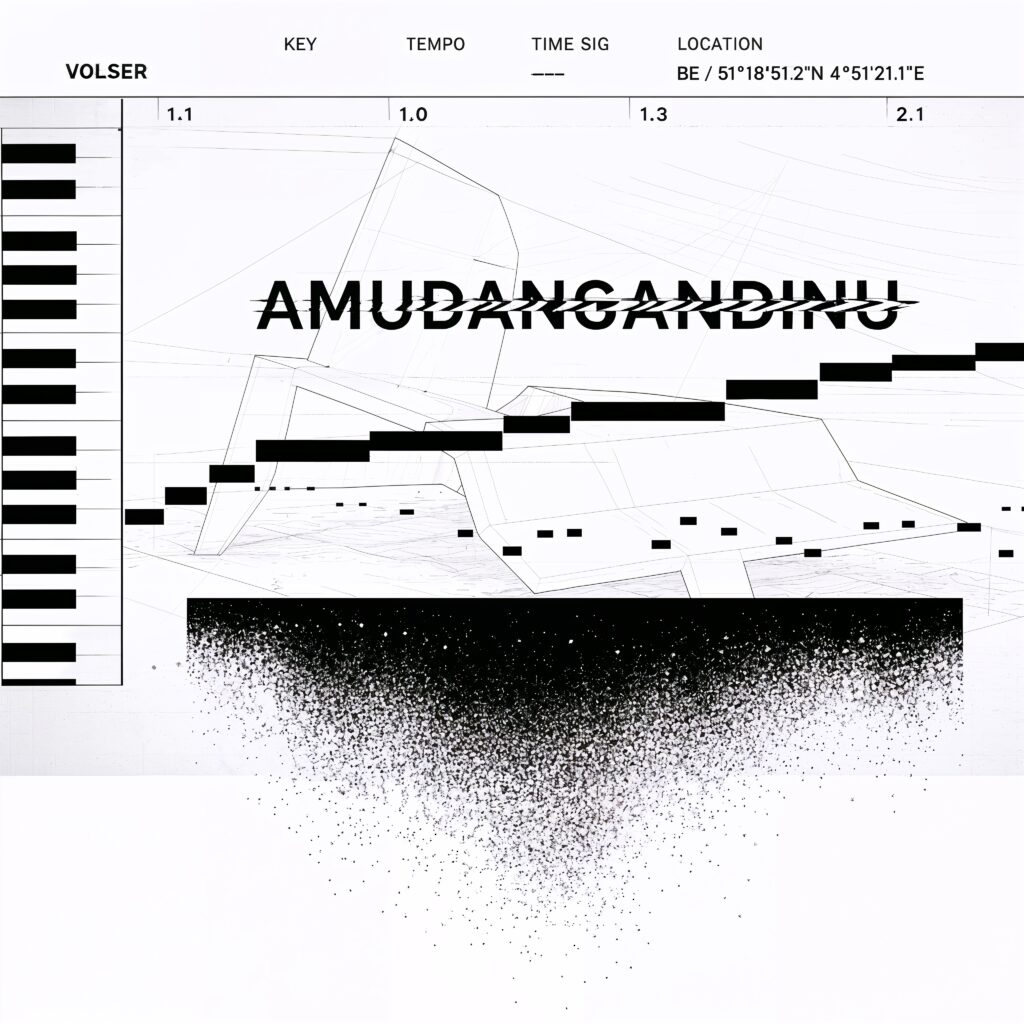
VOLSER — Material Transmutation (2026)
A sonic reconstruction based on the physical structure of steel object located in Beers, Belgium. This work operates as a Material Transmutation: a direct translation of mass, support and spatial tension into a timed 120 BPM system.
Location
51°18’51.2”N 4°51’21.1”E
Method
Structural Translation of Corten Steel
Source
Steel piano sculpture by Edgar Cappellin (2010), Beerse, Belgium
System
The work begins with a fixed and speechless object. In Beerse stands a full-size concert piano made entirely of corten steel.
Three heavy legs plunge diagonally into the ground, anchoring the massive structure with stubborn permanence.
The steel surface continuously reacts with the air and slowly changes through oxidation.
Internally the sculpture is mute — it holds no mechanism capable of producing sound.
These material facts alone became the only rules for the composition. From the sculpture four essential properties were extracted and used as strict conditions for the entire work.
Elements
The first decision concerns structure.
The three anchoring legs translate into three foundational keyboard layers that bear the weight of the piece: two independent piano lines, and one keyboard line. These three layers form the stable, load-bearing core of the composition. A separate synthesiser layer extends the timbral range without disturbing this foundation.
The second decision concerns mass.
Corten steel is heavy and resistant. This physical weight had to be audible in the sound. Velocity became the main carrier of that mass. Each note carries palpable force, and the differences in dynamics arise directly from the material itself rather than from any expressive intention.
The third decision concerns time.
Oxidation never stops. It moves slowly, in imperceptible stages, without clear boundaries. This quiet, relentless process was translated into the composition. The sonic texture evolves gradually throughout the duration of the piece, mirroring the ongoing transformation of the steel.
The fourth decision concerns the interior.
The sculpture contains a hollow, mute volume. This empty space was filled with voice — yet the voice was stripped of all language. It consists solely of the raw phonetic sequence “Amudangandinu”. Here the voice functions as pure sonic material, another physical layer without semantic meaning.
The composition runs at 120 BPM. The steady pulse holds the layers together and maintains their balance. The synthesiser broadens the sonic palette while remaining obedient to the same logic.
Output
Every element in AMUDANGANDINU derives strictly from the physical properties of the sculpture. Nothing was added from outside.
The work does not describe the object. It extends it in time. What remains fixed and mute in Beerse is set into motion through sound.Material Transmutation follows a clear chain: observation, selection of properties, assignment of functions, and realisation in another medium. Each stage follows from the previous one and determines the next.
The sculpture remains exactly where it stands.
Its properties, once dormant, are awakened and unfolded in time.